
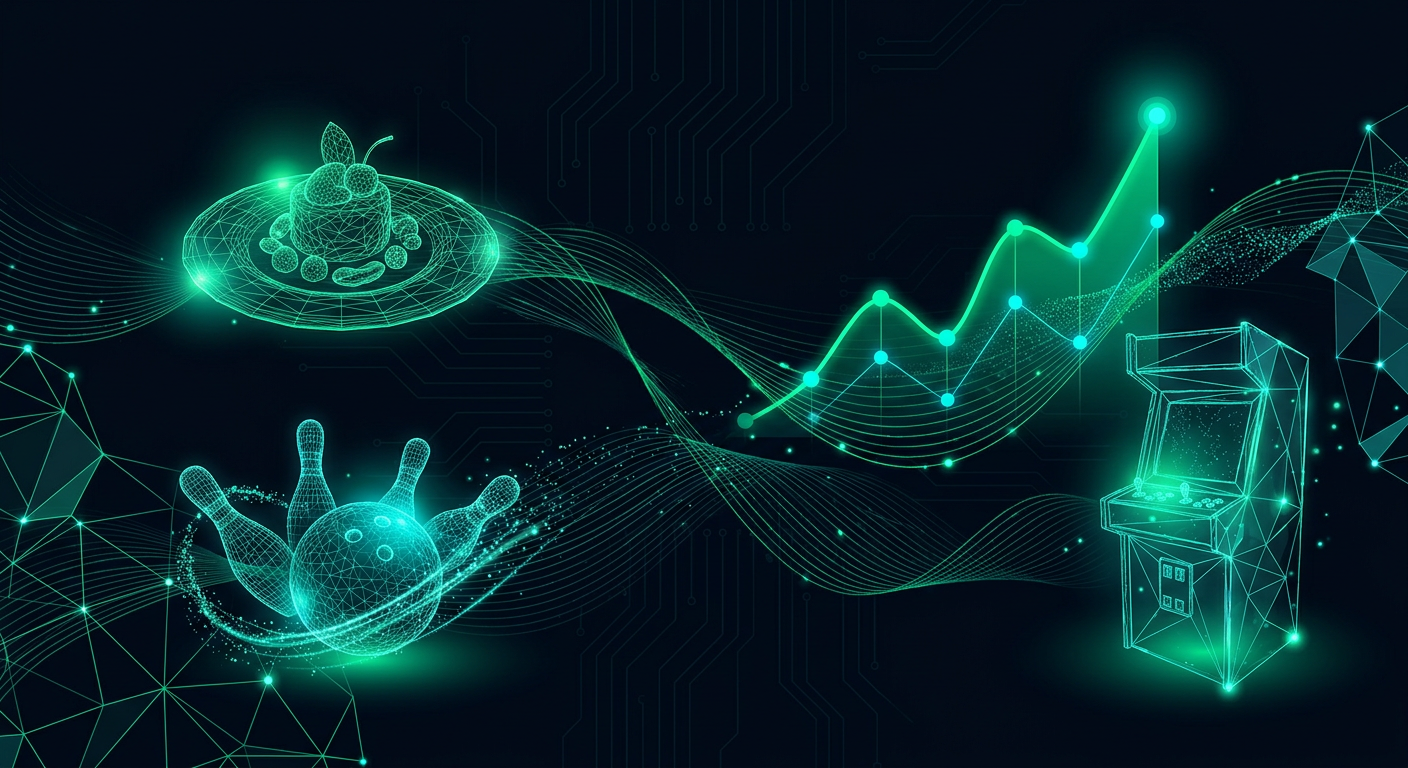
The bowling center down the street just hired a craft cocktail mixologist. The go-kart venue across town launched a weekend brunch. The trampoline park on the highway added a wood-fired pizza oven. And the new FEC that opened last month? They have a full-service restaurant with a chef who used to work at a Michelin-starred spot downtown.
This isn’t a coincidence - it’s the biggest revenue shift in experiential entertainment in a decade.
For years, food and beverage at entertainment venues was an afterthought. Soggy nachos under a heat lamp. Lukewarm hot dogs. A soda fountain and a soft-serve machine. F&B existed because guests got hungry, not because operators saw it as a serious revenue channel.
That era is over. Decisively.
According to Mordor Intelligence, successful entertainment venues now derive 50-60% of their total revenue from food and beverage - up from the historical 30-40%1. An OpenPR analysis of bowling center profitability found that F&B contributes 30-40% of total revenue with gross profit margins of 60-80%2. And here’s the kicker: 21% of food and beverage businesses are actively diversifying into experiential offerings3.
The convergence is happening from both directions. Restaurants are adding entertainment. Entertainment venues are becoming restaurants. And the winners in both categories are the ones who’ve figured out how to make the two work as a single, seamless experience.
Here’s the playbook.
Why F&B Is No Longer “Also Available”
To understand why food and beverage has become the single highest-leverage revenue opportunity for experiential venues, you need to understand three fundamental economic shifts.
The Dwell Time Multiplier
Every minute a guest stays in your venue is a minute they might spend money. F&B is the single most powerful tool for extending dwell time - and it’s not close.
The math is straightforward. A family that comes in for an hour of bowling and leaves immediately after their last frame generates X dollars. A family that comes in for bowling, orders appetizers while they play, finishes their game, moves to the bar area for drinks, and orders dinner before heading home generates 3-4X. Same family. Same visit. Same lanes. Dramatically different revenue.
Research from the broader hospitality industry consistently shows that guests who order food within the first 30 minutes of arrival stay 40-60% longer than those who don’t4. In an entertainment venue, that extended dwell time doesn’t just drive F&B revenue - it drives additional attraction purchases, arcade spending, and impulse upsells.
The Margin Advantage
Here’s a number that should reshape how you think about your business: the gross margin on a well-run F&B operation (60-80%) often exceeds the gross margin on attractions themselves.
When you factor in the capital cost of bowling lanes, laser tag equipment, go-kart tracks, or VR systems - plus maintenance, staffing, and space requirements - many attractions operate at 40-55% gross margins. A well-designed F&B program, by contrast, can hit 70%+ margins on beverage and 60%+ on food, with significantly lower capital requirements per dollar of revenue.
This doesn’t mean attractions don’t matter. They’re the draw. They’re why guests walk through the door. But once those guests are inside, F&B is often the most profitable way to monetize their visit.
The Experience Economy Premium
Today’s consumers don’t just want food - they want a food experience. And entertainment venues are uniquely positioned to deliver one.
Think about it. A craft cocktail at a regular bar costs $14 and comes with ambient noise. A craft cocktail at a bowling lounge, served directly to your lane while you’re mid-game with friends, surrounded by energy and laughter? That’s worth $16-18, and the guest perceives it as a better value because the context elevates the product.
This is the experience economy premium, and entertainment venues can charge it authentically. You’re not marking up food for no reason - you’re selling food as part of a multi-sensory experience that genuinely enhances the overall visit.
The Five Elements of a High-Revenue F&B Operation
Based on what we’re seeing at the highest-performing experiential venues, five elements consistently separate the operators generating 50%+ of revenue from F&B from those stuck at 20-30%.
1. Seamless Ordering That Meets Guests Where They Are
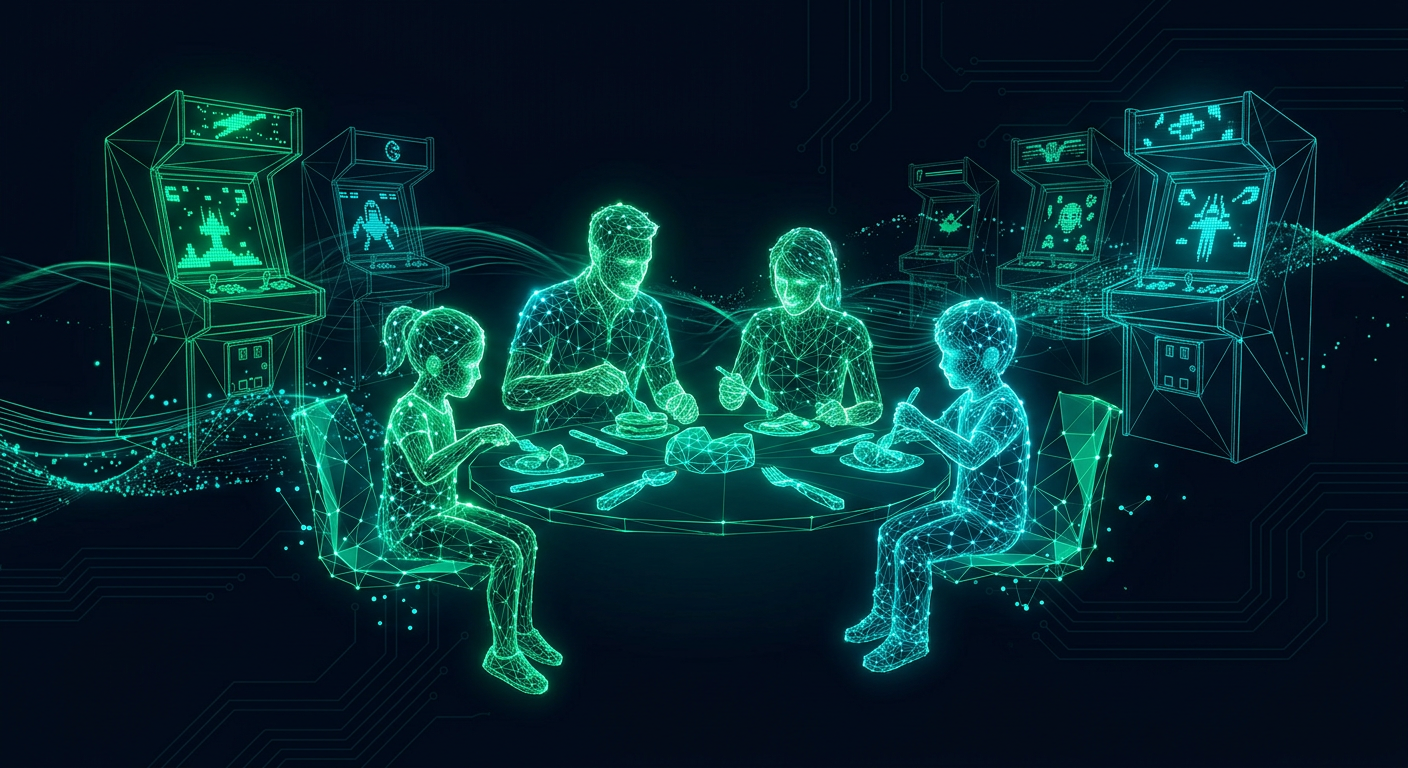
The number one killer of F&B revenue at entertainment venues isn’t bad food - it’s friction. When a guest has to leave their bowling lane, walk to a counter, wait in line, place an order, and then walk back, most guests simply don’t bother. They came to bowl, not to navigate a food court.
The highest-performing venues have eliminated this friction entirely. Table-side ordering via tablets or QR codes at each attraction station. Mobile ordering from the venue’s app. Food runners who deliver directly to lanes, bays, and gaming areas. Some venues have even installed in-lane ordering screens that integrate directly with the kitchen display system.
The key insight: every step between “I’m hungry” and “food arrives” that requires the guest to interrupt their entertainment is a step where you lose the sale. Remove the steps, capture the revenue.
2. A Menu Designed for Entertainment, Not Fine Dining
This is where a lot of venues get it wrong. They see the F&B opportunity, hire an ambitious chef, and create a menu that would work beautifully at a standalone restaurant - but fails miserably at a bowling center.
High-performing entertainment venue menus share specific characteristics:
Shareable formats. Platters, boards, family-style servings, and items designed for groups. When six people are bowling together, they don’t want six individual entrees - they want wings, loaded nachos, flatbreads, and sliders they can grab between frames.
One-hand-friendly options. This sounds trivial, but it’s critical. If your guests are holding a bowling ball, a go-kart steering wheel, or an arcade joystick, they need food they can eat with one hand. Wraps outperform open-face sandwiches. Skewers outperform plated proteins. Cups outperform bowls.
Speed-optimized preparation. Entertainment guests want their food fast - not fast-food fast, but they’re not willing to wait 45 minutes while their reserved lane time ticks down. The best entertainment venue kitchens are engineered for 12-18 minute ticket times, with menus designed around equipment and prep methods that support that speed.
Strategic beverage programming. Beverages are your highest-margin F&B category. Period. Craft cocktails, local beer selections, creative mocktails for all-ages venues - these drive revenue and differentiate your venue from competitors. The top venues are investing in beverage programs the way they invest in new attractions: with dedicated expertise and intentional design.
3. Technology That Connects Kitchen to Lane
Here’s where most venues leave money on the table - literally. Even venues with great food and good menus lose F&B revenue because their kitchen operations aren’t connected to their attraction operations.
When a birthday party books lanes 15-18 from 2:00 to 4:00 PM, your kitchen should know that 12 guests are arriving at 2:00 and will likely order food by 2:30. When a corporate group of 40 books the event space, the F&B team should automatically receive the pre-selected menu and headcount - not find out about it the day of.
The most operationally sophisticated venues run their entire operation - bookings, attractions, F&B, and payments - on a single unified platform. This means the kitchen display system shows orders tagged with the guest’s location (Lane 7, Bay 12, VR Room 3). It means the bar knows there’s a bachelorette party arriving in 30 minutes and can pre-batch the cocktail order. It means the server covering the arcade floor can see exactly how much time a group has left on their game card and time the dessert upsell perfectly.
This level of operational integration doesn’t happen by accident. It requires technology purpose-built for the unique complexity of experiential venues.
4. Data-Driven Menu Engineering
The best restaurant operators in the world use menu engineering - analyzing the profitability and popularity of every item to optimize the overall menu mix. Entertainment venues should do the same, but with a critical additional dimension: attraction correlation.
Your data should tell you not just which menu items sell best overall, but which items sell best in each context. Do bowlers order more appetizers than go-kart racers? Do VR guests skip food entirely? Do arcade players gravitate toward snacks and beverages while birthday parties drive entrée sales?
When you can see these patterns - and you can only see them when your F&B data and attraction data live in the same system - you can make strategic decisions that move the needle. Targeted promotions for underperforming dayparts. Attraction-specific combo deals (“Kart & Cocktail” packages, “Bowl & Brunch” bundles). Dynamic pricing that adjusts menu pricing alongside peak and off-peak attraction pricing.
This is where the experiential venue F&B advantage becomes truly unfair. Standalone restaurants can only optimize based on time of day and customer demographics. Entertainment venues can optimize based on activity context, group composition, dwell time predictions, and spending patterns across the entire visit journey.
5. Private Events as the F&B Accelerator
If you’re not treating your private events business as your F&B accelerator, you’re missing the single biggest revenue opportunity in experiential entertainment.
Consider the economics. A typical walk-in guest at a bowling center might spend $12-18 on F&B during a visit. A guest attending a private birthday party? $25-35. A guest at a corporate event? $40-60. The F&B per-capita spending at private events is typically 2-4x higher than casual visits - and the margins are often better because you’re working with pre-selected menus and guaranteed headcounts.
The venues crushing it in private events have made the booking-to-execution pipeline completely frictionless. Online event booking with instant quotes. Customizable F&B packages that guests can build themselves. Automated BEO (banquet event order) generation that flows directly from the booking system to the kitchen. Post-event follow-up that includes a rebooking incentive.
When your events pipeline is automated and integrated, your events team spends less time on administrative tasks and more time selling. And every event they sell is a high-margin F&B windfall.
The Common Mistakes to Avoid
Before we wrap up, let’s address the three most common mistakes venues make when trying to grow F&B revenue:
Mistake #1: Investing in the kitchen before investing in the systems. A $200,000 kitchen renovation means nothing if guests can’t easily order from their lane. Fix the ordering experience first, then invest in kitchen capacity to meet the demand you’ve unlocked.
Mistake #2: Treating F&B as a separate business. The venues that struggle with F&B are almost always the ones where the F&B operation runs on separate systems with separate staff and separate P&L responsibility. When F&B is siloed from attractions, you lose the integration advantages that make entertainment venue dining unique.
Mistake #3: Copying standalone restaurant strategies. You are not a restaurant with bowling lanes. You’re an entertainment venue with a food program. The strategies, metrics, and operational approaches are fundamentally different. Embrace that difference.
Building Your F&B Revenue Engine
The shift toward F&B as the dominant revenue driver at experiential venues isn’t a trend - it’s a structural transformation of the business model. The venues that recognize this and invest accordingly will generate significantly more revenue per square foot, per guest, and per visit than those clinging to the attractions-first mindset.
But capturing this opportunity requires more than great food. It requires integrated technology that connects every guest touchpoint - from the initial booking to the final check. It requires data systems that reveal the patterns hidden in the intersection of entertainment behavior and dining behavior. And it requires operational platforms that make execution seamless for your team.
EagleEye was built for exactly this. As the unified operating system for experiential venues, EagleEye connects your F&B operations directly to your bookings, attractions, payments, and analytics - giving you the complete picture and the operational tools to turn food and beverage into your venue’s most powerful profit center.
The bowling center down the street hired a mixologist. The go-kart venue launched a brunch. The question is: what’s your F&B strategy?
References
- Entertainment Venue Revenue Mix Analysis: Mordor Intelligence ↩
- Bowling Center F&B Profitability Analysis: OpenPR ↩
- F&B Industry Trends Report 2025: Expert Market ↩
- Hospitality dwell time and F&B ordering research: broader hospitality industry studies ↩