
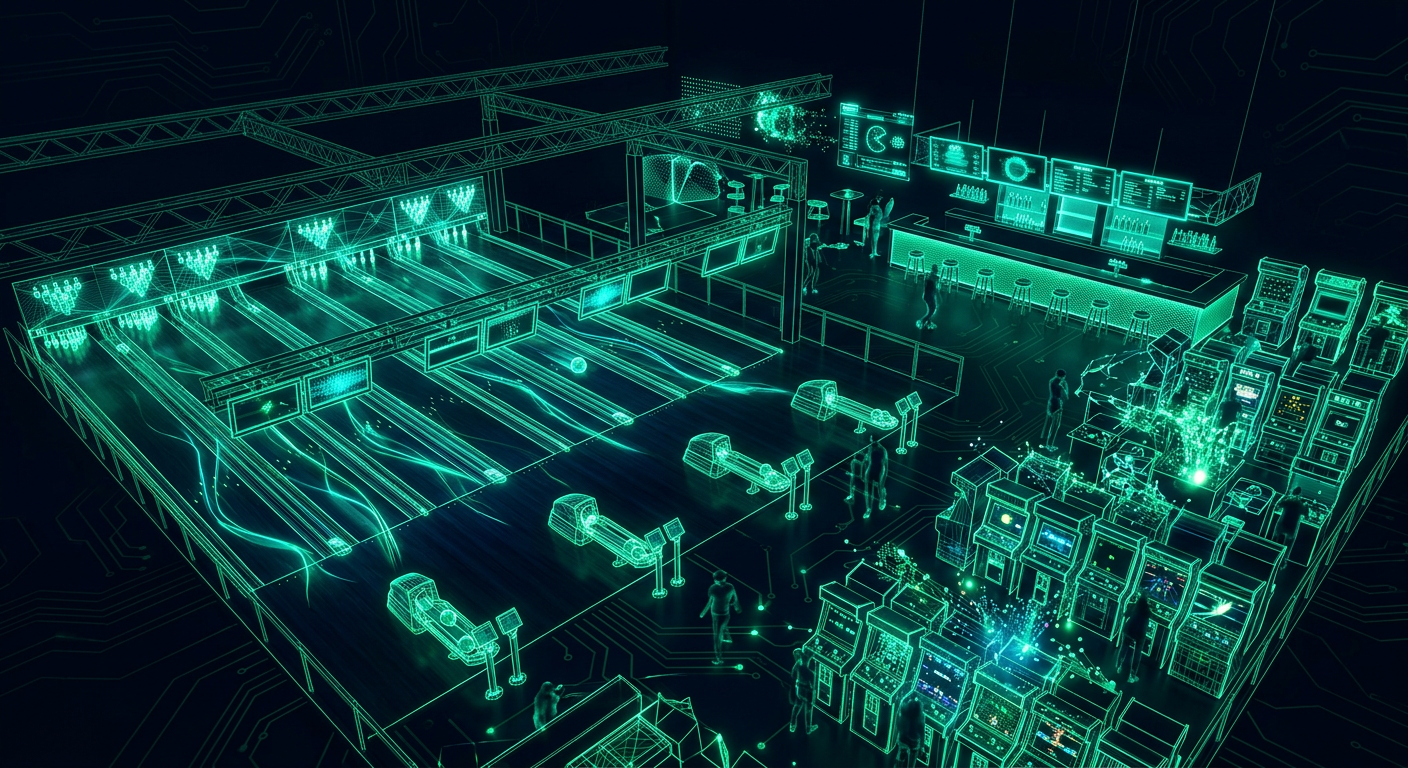
Something remarkable is happening in the entertainment industry. While traditional retail struggles and restaurants face razor-thin margins, family entertainment centers are experiencing unprecedented growth. The global FEC market is projected to grow at 8-12% annually over the next decade, with multiple research firms forecasting the sector will exceed $40 billion by 2035.
But the venues opening today look nothing like the bowling alleys and arcades of the past. They’re multi-experience entertainment hubs built on unified technology platforms that legacy operators are still trying to understand.
So what do these new operators know that the rest of the industry is catching up to?
The Experience Economy Meets Smart Operations
Three forces are driving the FEC boom:
Consumer demand for experiences over stuff. Post-pandemic, families prioritize quality time together. Corporate teams want memorable team-building. Date nights need more than dinner and a movie.
Investment interest. Private equity and venture capital have identified experiential entertainment as high-growth and recession-resistant, with well-run FECs generating 20-30% EBITDA margins.
Technology barriers have collapsed. Modern platforms can now handle the operational complexity that used to require multiple fragmented systems.
Why the Old Model Is Broken
Picture this common scenario: A family wants to bowl, grab lunch, and play laser tag. At most venues, that means three separate systems - one for bowling, another for food, and a third for laser tag. Three different transactions. Three different staff interactions. No unified loyalty program. No cross-selling opportunities.
Legacy operators patch this with integrations, manual data entry, and extensive staff training. Some run five or six different software platforms just to operate.
New operators have rejected this model entirely.
What Smart Operators Know
Successful new FECs understand three principles that separate them from the competition:
1. Unified Operations Aren’t Optional Anymore
When booking, gameplay, F&B, payments, and analytics all run on one platform, you unlock capabilities that fragmented systems can’t provide. A guest’s food order follows them from bowling to arcade. Birthday parties auto-book lanes, reserve rooms, and pre-order food in one transaction. Staff scheduling aligns with actual booking forecasts.
The financial impact is real: 15-25% reduction in labor costs per transaction, and 10-20% increases in per-guest spending through seamless cross-selling.
 ### 2. Data Drives Every Decision
Legacy operators make major decisions - which attractions to invest in, when to run promotions, how to price - based on gut instinct. “Saturdays feel busy” isn’t a strategy.
New operators know exactly which attractions drive the highest revenue, when guests are most likely to order food, and which promotions actually work. This 360-degree view is only possible with unified data.
3. The Guest Experience Is One Continuous Journey
Smart operators think of every touchpoint - website booking, check-in, gameplay, dining, follow-up - as a single fluid experience. When systems are unified, every handoff is an opportunity to enhance the experience and drive revenue.
The Hybrid Venue Advantage
New FECs are moving away from single-concept venues toward multi-attraction formats that combine bowling, arcade games, laser tag, axe throwing, VR, dining, and events under one roof.
Hybrid venues increase dwell time and multiply revenue opportunities per visit. A guest coming for go-karts stays for dinner. A birthday party adds VR sessions. A corporate group renting space adds bowling and drinks.
But hybrid only works if your technology can handle the complexity. Six attractions on six systems is a nightmare. Six attractions on one platform is a competitive advantage.
What This Means for Existing Operators
The wave of new FEC openings isn’t necessarily a threat - but it is a reality check. New entrants aren’t winning because they have bigger budgets. They’re winning because they start with operational foundations that create structural advantages.
Ask yourself:
- Can guests book, play, eat, and pay without staff touching multiple systems?
- Do you know real-time revenue by attraction, day, and time?
- Can you launch targeted promotions in minutes, not days?
- Do your attractions and F&B feel integrated or separate?
If you answered “no” to any of these, you’re operating at a disadvantage that will only grow.
The Technology Tipping Point
We’re at an inflection point. Operators who embrace unified platforms will thrive. Those patching together fragmented solutions will struggle to compete on guest experience, efficiency, and profitability.
The question isn’t whether unified operations will become standard. The question is whether you’ll lead the transition or scramble to catch up.
Ready to see what a unified operating system can do for your venue? Talk to EagleEye today.